Lethbridge Harm Reduction

Adverse childhood experiences (ACEs) are “events or continuous exposure to circumstances beyond a child’s control that may negatively impact their well-being” [1]. The ACE study considered these occurrences in relation to adult health outcomes and found 10 common types of childhood trauma (which are listed in the image to the right of this paragraph).
The greater the number of overlapping traumas a child has, the greater the likelihood they will experience toxic stress and suffer negative health outcomes in adulthood [1].

Image by Jacob et al., 2019
Adverse Childhood Experiences
The Stress Response
When under duress, the stress response system (the hypothalamic-pituitary-adrenal axis) becomes activated. This increases blood pressure, heart rate, and cortisol, so that a fight, flight, or freeze response may occur [1]. When this stress response system is continually activated (through toxic stress), a toxic stress response can occur [1]. One aspect of this is the continual release of cortisol. This stress hormone can have detrimental effects on brain development, suppress the immune system, create digestive problems, heart disease, and increase blood sugar levels [1][2]. Furthermore, toxic stress is expressed on a molecular level, altering the genome [1]. These epigenetic changes thus being passed onto future generations, resulting in multigenerational dysregulation of the stress response system and children who are more susceptible to issues such as mental illness and substance use disorders [1].
The cumulative and overlapping combination of ACEs thus impacting an individual’s mental and physical health as well as the health of their future children.

Image provided by Jacob et al., 2019)

Image provided by Jacob et al., 2019)
Additionally, it has been found that compared to those with no ACEs, those with four or more are more likely to attempt suicide, have alcoholism, or inject street drugs [1], as well as be more likely to suffer from physical illnesses, such as diabetes, cancer, heart disease, and mental illness [1]. This includes a significant increase in the risk (at least 34% per trauma) of developing any type of substance use disorder (drugs or alcohol) [3].
In fact, substance use disorder has been found to be the most frequent behavioural consequence of childhood abuse and neglect [4]. There are many theories as to why this is. One relates to the neuroendocrine changes in response to chronic stress, as there may be difficulties in self-regulation, interpersonal relationships, and a negative sense of the self [4]. Another belief the self-medication hypothesis, where individuals discover that the specific effects of different drugs relieve or change a range of painful stimuli [5].
Adverse childhood experiences are universal, meaning they can impact any person despite age, race, or gender. Yet because the Indigenous population of Lethbridge makes up 53% of those accessing supervised consumption services, their history regarding colonization and residential schools is of utmost importance to understand [6].


Residential Schools
"The residential school system established for Canada's Indigenous population in the 19th century is one of the darkest, most troubling chapters in our nation's history"
- Justice Murry Sinclair [7]
Residential schools were a system established by missionary organizations as a way to transform existing cultures to accept their values and goals with the central purpose of conversion to Christianity. Then, in time it was believed that to civilize and educate the Indigenous children properly, they must be separated from their families and communities [7].
"The long-term goal of Canadian Indian policy should be to instruct our Indian and half-breed populations in farming, raising cattle, and the mechanical trades, rendering them self-sufficient and thus paving the way for their emancipation from tribal government, and for their final absorption into the general community...an outcome that can only be achieved through the establishment of industrial schools"
- J. S. Dennis, 1878 [7]
Within five years that this suggestion was made, Sir John A. Macdonald passed a law that funded and regulated the schools for the "moral and religious improvement of the Indians" [8][7].
To learn more about residential schools and their impact on its students, watch the videos provided below.
All Videos
All Videos
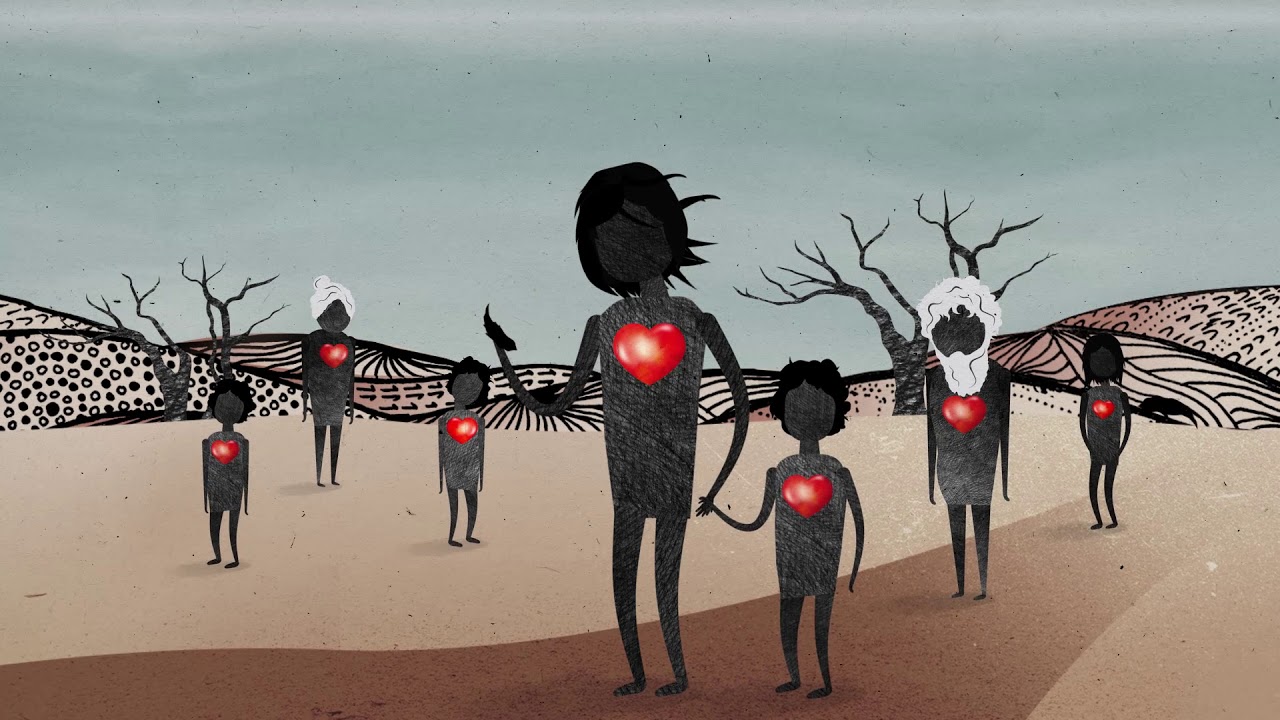
Intergenerational Trauma Animation

“The Stranger” Official Video - Gord Downie - Secret Path

Crimes against children at residential school: The truth about St. Anne's - The Fifth Estate
(Wikipedia, n.d.)
Following is a timeline showing many of the significant moments throughout Indigenous Canadian history.
Residential School Timeline
All data for the timeline was derived from:
Giokas, J. (1995). The Indian Act: Overview and options for amendment and transition. Barrister and Solicitor.
Truth and Reconciliation Commission of Canada. (2015). Canada's residential schools: The history, part 1 origins to 1939. McGill-Queen's University Press
Truth and Reconciliation Commission of Canada. (2015). Canada's residential schools: The history, part 2 1929 to 2000. McGill-Queen's University Press.
Truth and Reconciliation Commission of Canada. (2015). Honoring the truth, reconciling for the future: Summary of the final report of the Truth and Reconciliation Commission of Canada. Truth and Reconciliation Commission of Canada.
CBC News. (2016). A timeline of residential schools, the Truth and Reconciliation Commission. https://www.cbc.ca/news/canada/a-timeline-of-residential-schools-the-truth-and-reconciliation-commission-1.724434
Aboriginal Peoples Television Network. (2019). The first national day for truth and reconciliation. https://aptn.ca/nctr/

Residential Schools 1860s
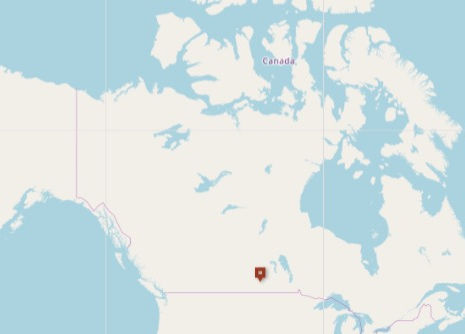
Residential schools 1996
Historical Trauma
Historical trauma (also known as intergenerational trauma) is the “collective emotional and psychological injury, both over the life span and across generations, resulting from a cataclysmic history that occurs as a result of genocide and other significant abuses” [9].
The framework of historical trauma has three consecutive phases.
-
The dominant culture perpetrates mass traumas on a population, resulting in cultural, familial, societal, and economic devastation for the population [10].
-
The original generation of the population responds to the trauma showing biological, societal, and psychological symptoms [10].
-
The initial responses to trauma are conveyed to successive generations through environmental and psychological factors, and prejudice and discrimination [10].
From this framework, it is easy to see how the Indigenous people of Canada were subjected to traumas through their historical losses of population, land, family, and culture [10]. These traumas then resulted in the historical loss symptoms related to the social-environmental and psychological functioning that continue today [10].
Through colonization, the Indigenous population in North America decreased by 95% [10]. This occurred through intentional killing, as well as through the exposure of European diseases (smallpox, diphtheria, measles, and cholera), which was often done intentionally through gifts such as blankets [10]. They were further impacted by the loss of their land and their culture through laws banning traditional ceremonies, enforced enfranchisement, and residential schools. As a result, “subsequent generations have been left with feelings of shame, powerlessness, and subordination” [10].
Historical trauma can manifest in a variety of ways:
-
Historical unresolved grief, or the grief that has not been adequately expressed, acknowledged or otherwise resolved [9]
-
Disenfranchised grief, or the grief when loss cannot be voiced publicly or loss that is not openly acknowledged by the public [9]
-
Internalized oppression, or how traumatized people may begin to internalize the views of the oppressor and perpetuate a cycle of self-hatred that manifests itself in negative behaviours. Emotions such as anger, hatred, and aggression are self-inflicted, as well as inflicted on members of one’s own group [9]
These traumatic historical losses resulted in numerous historical loss symptoms. The Indigenous population has higher rates of victimization among Indigenous women (more than three times as likely to be a victim of a violent crime compared to non-Indigenous women) [11], higher rates of homicide among indigenous men and boys (they are up to 7 times more likely than non-Indigenous men and boys to be a victim of homicide) [11], and an overrepresentation of Indigenous children in child welfare (Indigenous children account for 7.7% of the Canadian population yet make up 51.2% of foster children in 2018) [11].
With the First Nations population, depression rates are twice the national average [12], suicide rates are twice the national average as well [12] (yet is up to 6 times higher for First Nations youth and 10 times the national average for Inuit youth [13]), and infant mortality rates are approximately 1.5 times higher than the national average [13]. Education, employment, and income rates are lower than the Canadian average [13], and housing is often inadequate and in need of repair [13].
Indigenous people are over-represented in the criminal justice system as offenders and inmates, yet under-represented as officials, officers, court workers, and lawyers [13]. These high crime rates are the result of the effects of the “residential school system, experience in the child welfare system, effects of the dislocation and dispossession of Indigenous peoples, family or community history of suicide, substance abuse, victimization, lower education attainment, poverty, poor living conditions, and exposure to/membership in street gangs”[13].
“The history of dislocation from traditional communities, disadvantage, discrimination, forced assimilation including the effects of the residential school system, poverty, issues with substance use disorder, victimization, and loss of cultural and spiritual identity are all contributing factors”[13]
Trauma impacts physiological functioning via the stress response system and may clarify one reason why some of the Indigenous within our community is suffering from such severe emotional, physical, and social-environmental consequences related to past traumas [10]. Another thing to consider is an individual’s perception of being discriminated against, which has been found to be associated with negative health consequences such as risky alcohol use, illicit drug use, a diagnosis of major depressive disorder, as well as post-traumatic stress disorder [10].
And as mentioned above, this trauma then impacts subsequent generations, putting them at an increased risk of experiencing mental and physical distress without the strength of their Indigenous culture [10]. Other than biological adaptations, it has been found that trauma is passed down through three primary methods:
-
Children identifying with their parents’ suffering [10]
-
Children being influenced by the style of communication caregivers use to describe the trauma [10]
-
Children being influenced by particular parenting styles [10].

Why is this relevant?
Over 150,000 children were taken from their homes. These children suffered emotional abuse, neglect, physical abuse, sexual abuse, and spiritual abuse [21]. Once taken to the schools, children were given a number, stripped of their clothing, scrubbed "clean", and their hair cut short. They were not to touch one another, speak their language, nor mention traditions or any other aspect of their culture. Parent contact, both physical and in writing, was strictly controlled [7]. The schools were sites of hunger, isolation, overwork, danger, and disease, as well as limited education [7]. Once these children turned 18 years of age they were allowed to work and return home, but many no longer knew where they came from or who their parents were [7]. The mortality rates within these schools were higher than for Canadians serving in World War II [17]. The Truth and Reconciliation Commission has documented the deaths of over 6,000 residential school children [17], yet this number is estimated to be at least 5 times higher [18]. Only 2,800 of the children have been named (see above below), many remained unnamed, and hundreds have simply vanished [19]. For 7 generations, this system impacted the individual, their family, the community, and society; and, still does to this day, which is shown in part through the drug crisis in Lethbridge.
How can non-Indigenous members of the community help Indigenous individuals and families?
Society must begin to grasp Indigenous perspectives and formulate models of care based on Indigenous needs, not ethnocentric values. Society must give power back to First Nation communities so culturally appropriate services can be provided and improve healing [14]. The community must reflect critically, looking at the role non-Indigenous people played in Indigenous history from various perspectives, as it is in this way we can learn from and change our behaviour [15].
Educate yourself and those around you; support Indigenous programs and organizations; decolonize the bureaucratic, cultural, linguistic, and psychological structures put in place, and restore an Indigenous world view; recognize your privilege and how ethnocentric values and structures support Indigenous oppression; question and resist racist stereotypes; learn of Indigenous culture, and position yourself as an ally.
The foundational component for achieving health and wellness for First Nation individuals is to ensure a system of care that is holistic, strength-based, and founded on culture [16]. How culture is attended to in addressing substance use disorder must be guided by:
-
Cultural competence: people must be aware of their own worldviews and attitudes towards cultural differences, and be knowledgeable and open to the cultural realities of others [16].
-
Culturally safe: pay attention to cultural, historical, and structural differences and power relationships in society, showing sensitivity and cultural awareness to allow for growth in the system as a whole [16]
-
Cultural relevancy: acting in a culturally competent manner to ensure that any action based on culture respects the diversity of culture and is specific to the individual, family, or community [16].

Image: Sullivan, 2013
Although the focus has been placed on understanding Indigenous people and their history in Canada, trauma is universal, and people who have experienced traumas are at risk of substance use disorder as they are used to escape or dissociate, and to relieve the stress caused by the experience. Substance use is not the problem, but rather a way to escape the underlying issues [20]. It is crucial to empathize with others and show compassion, as every human being is worthy of respect, kindness, and social justice.
[1] Jacob, G., Van Den Heuvel, M., Jama, N., Moore, A. M., Ford-Jones, L., & Wong, P. D. (2019). Adverse childhood experiences: Basics for the pediatrician. Paediatrics & Child Health, 24(1), 30-37. (p. 30)
[2] Premier Health. (2017, February 5). Beware high levels of cortisol, the stress hormone. Premier Health. https://www.premierhealth.com/your-health/articles/women-wisdom-wellness-/beware-high-levels-of-cortisol-the-stress-hormone
[3] LeTendre, M. L., & Reed, M. B. (2017). The effect of adverse childhood experience on clinical diagnosis of substance use disorder: Results of a nationally representative study. Substance Use & Misuse, 52(6), 689-697.
[4] Schafer, I., Pawils, S., Driessen, M., Harter, M., Hillemacher, T., Klein, M., Muehlhan, M., Ravens-Sieberer, U., Schafer, M., Scherbaum, N., Schneider, B., Thomasius, R., Wiedemann, K., Wedscheider, K., & Barnow, S. (2017). Understanding the role of childhood abuse and neglect as a cause and consequence of substance abuse: The German CANSAS network. European Journal of Psychotraumatology, 8, 1-6.
[5] Khantzian, E. J. (1997). The self-medication hypothesis of substance use disorders: A reconsideration and recent applications. Harvard Review Psychiatry, 4(5), 231-244.
[6] City of Lethbridge. (2019). Lethbridge community wellbeing: Needs assessment report. City of Lethbridge. https://www.lethbridge.ca/living-here/Our-Community/Documents/Lethbridge_CSD_NeedsAssessment_Final.pdf
[7] Truth and Reconciliation Commission of Canada. (2015). Canada's residential schools: The history, part 1 origins to 1939. McGill-Queen's University Press. (p. VII, p. 153, p. 131, p.144)
[8] The Globe and Mail. (2017). Why reconciliation? Understanding the ugly legacy of residential schools. https://www.theglobeandmail.com/life/globewe/we-day-unit-3/article36824295/
[9] Durham, M., & Webb, S. S. N. (2014). Historical trauma: A panoramic perspective. The Brown University Child and Adolescent Behavior Letter, 30(10), 1-6.
[10] Brown-Rice, K. (2013). Examining the theory of historical trauma among Native Americans. The Professional Counselor, 3(3), 117-130. doi:10.15241/kbr.3.3.117
[11] Statistics Canada. (2018). First Nations people, Metis and Inuit in Canada: Diverse and growing populations. https://www150.statcan.gc.ca/n1/pub/89-659-x/89-659-x2018001-eng.htm
[12] Khan, S. (2008). Aboriginal mental health: The statistical reality. Here to Help. https://www.heretohelp.bc.ca/aboriginal-mental-health-statistical-reality.
[13] Sawchuk, J. (2011, October 31). Social conditions of Indigenous peoples in Canada. The Canadian Encyclopedia. https://www.thecanadianencyclopedia.ca/en/article/native-people-social-conditions
[14] Tooms, E., Drawson, A., Bobinski, T., Dixon, J., & Mushquash, C. (2018). First Nations parenting and child reunification: Identifying strengths, barriers, and community needs within the child welfare system. Child & Family Social Work, 23(1), 408-416.
[15] Blackstock, C. (2009). The occasional evil of angels: learning from the experiences of Aboriginal peoples and social work. First Peoples Child & Family Review, 4(1), 5-8.
[16] Sullivan, L. (2013). Synopsis of First Nations substance abuse issues: Developed for use by the RNAO. National Native Addictions Partnership Foundation. https://rnao.ca/sites/rnao-ca/files/RNAO-Synopsis-of-First-Nations-Substance-Abuse-Issues-2013-26-09.pdf
[17] Schwartz, D. (2015, June 02). Truth and reconciliation commission: By the numbers. CBC News. https://www.cbc.ca/news/indigenous/truth-and-reconciliation-commission-by-the-numbers-1.3096185
[18] CBC News: The National. (2015, December 20). Death at residential schools [Video]. YouTube. https://youtu.be/9FydzIzkndA
[19] APTN National News. (2019, September 30). Names of children who died in residential schools to be released. https://aptnnews.ca/2019/09/30/names-of-children-who-died-in-residential-schools-to-be-released/
[20] Ross, A., Dion, J., Cantinotti, M., Collin-Vezina, D., & Paquette, L. (2015). Impact of residential schooling and of child abuse on substance use problems in Indigenous peoples. Addictive Behaviors, 51(1), 184-192.
[21] Dawn Tisdale. (2015, June 4). The impact of residential schools on Aboriginal Healthcare [Video]. Tedx Talks. https://youtu.be/kMvn_mSsykE